Hydration in sourdough
There’s something about sourdough that humbles a person. You can read all the books in the world, watch every fancy video online, buy the expensive bannetons and those razor blade things everybody suddenly calls a lame… and that dough will still look you dead in the eye and do whatever it pleases if you don’t learn how to feel it.
And one of the biggest things you learn to feel is hydration.
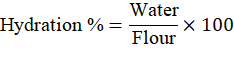
Now that sounds awfully scientific for something as simple and old-fashioned as bread, but really all hydration means is how much water is in your dough compared to the flour. That’s it. Nothing mystical about it.
The funny thing is, a little bit more water can change everything. One dough will sit there nice as you please like a church lady at Sunday supper, and another will crawl across your counter like a scene from a horror show..
That’s the difference between lower hydration and higher hydration dough.
Now when I first started baking sourdough, nobody explained any of this to me. Folks just kept saying things like “trust the dough” and “read the crumb,” and I’m standing there with flour in my eyebrows wondering if I accidentally joined a bread cult.
So let me explain it the way I wish somebody had explained it to me.
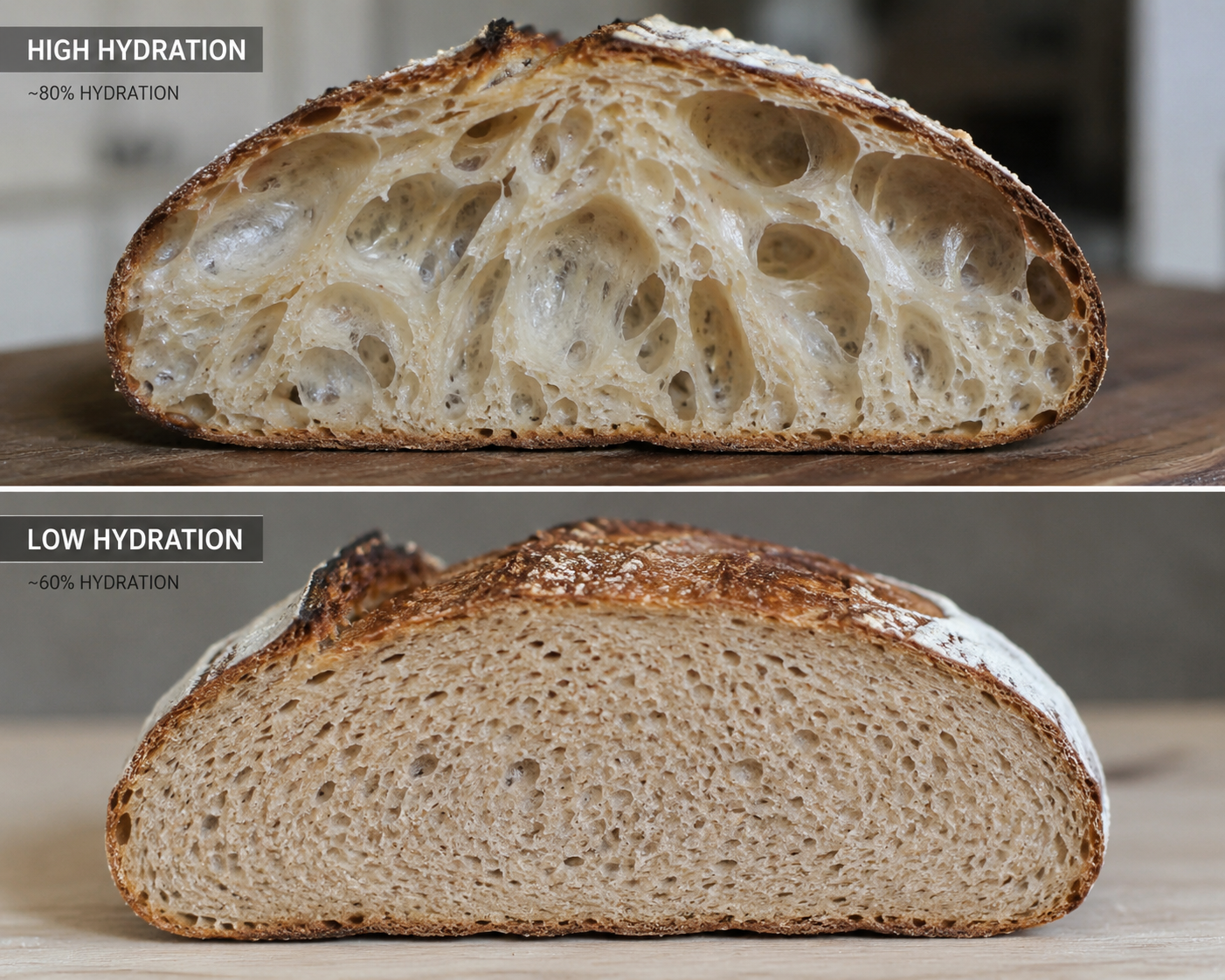
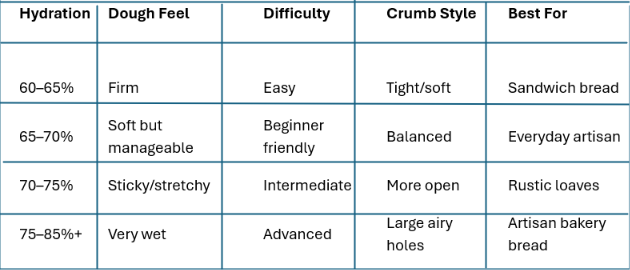
A lower hydration dough usually sits somewhere around 60–68% hydration. That dough feels firmer in your hands. It behaves itself better. It’s easier to shape, easier to score, and doesn’t stick to every blessed thing in your kitchen. If you’re making sandwich bread or something you actually want to hold butter without it dripping through giant holes onto your lap, lower hydration is wonderful.
The crumb comes out softer and tighter. Cozy bread. Everyday bread. The kind your grandfather would stand at the counter eating warm with salted butter while claiming he was “just having a bite.”
Now higher hydration dough… well. That’s a whole different creature.
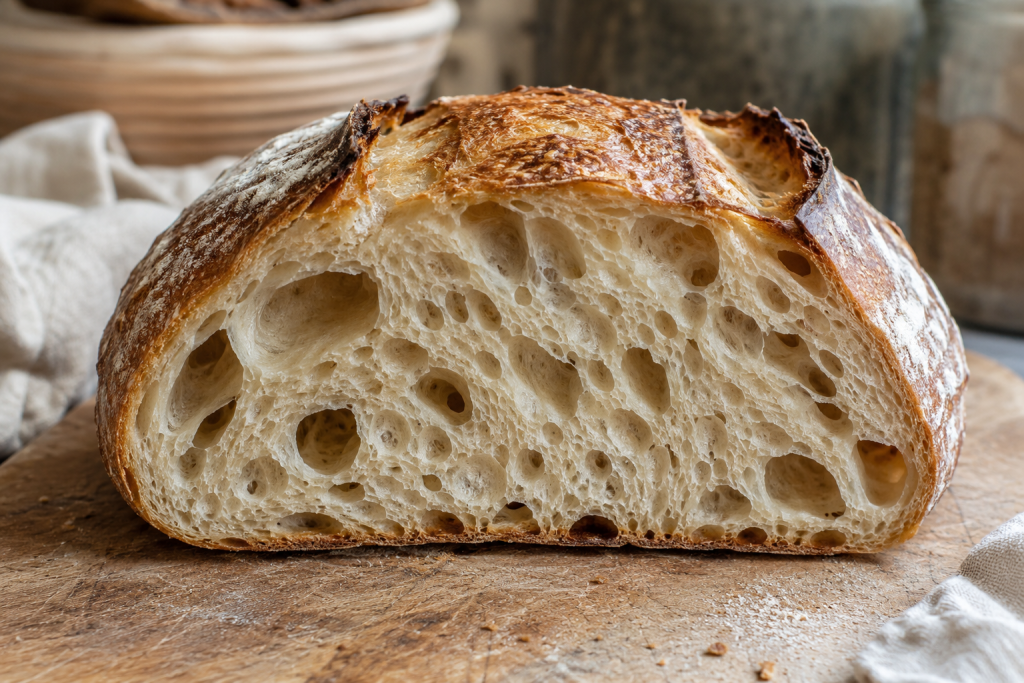
Once you start getting into 72%, 78%, 80% and beyond, that dough gets looser and stretchier. Wet. Jiggly. Sticky enough to make you question your life choices. But when it works, oh honey, it’s beautiful. Big airy holes, shiny crumb, crackly crust that sings while it cools.
That’s the kind of bread people post online with dramatic music playing in the background.
But here’s the truth nobody says enough:
A beginner does not need to start there.
I always tell folks to begin around 65–70% hydration. That’s where you really learn sourdough. You can practice shaping without your dough becoming a puddle. You can learn fermentation without panic sweating. You can build confidence before trying to tame the wild stuff.
And confidence matters in sourdough. Bread can smell fear.
Now let’s talk starters for a minute because your starter matters too.
Most folks use what’s called a 100% hydration starter, though that sounds fancier than it is. It just means equal parts flour and water.
So if you feed:
- 50g starter
- 50g water
- 50g flour
…you’ve got a regular liquid starter.
That works beautifully for lower hydration doughs and honestly for most everyday baking.
But when people start baking wetter doughs, especially in warm kitchens, some bakers switch to a stiff starter. Less water, more structure. Kind of like wearing boots instead of flip-flops when the road gets muddy.
Something like:
- 50g starter
- 50g water
- 100g flour
That stiffer starter helps give strength to those wetter doughs.
Now bulk fermentation… that’s where hydration really starts showing its personality.
A lower hydration dough rises upward more. It holds itself together better. When it’s ready, it’ll look puffed up and smooth and feel airy when you touch it. It jiggles a little, but politely.
Higher hydration dough spreads more than it rises. It’ll wobble like pudding if you shake the bowl. You’ll see bubbles along the sides and top, and it’ll look glossy and alive. The first time you see a truly fermented high hydration dough, it almost feels like the thing is breathing.
That said, wet dough can fool people. Beginners often think:
“Stickier means better.”
Nope.
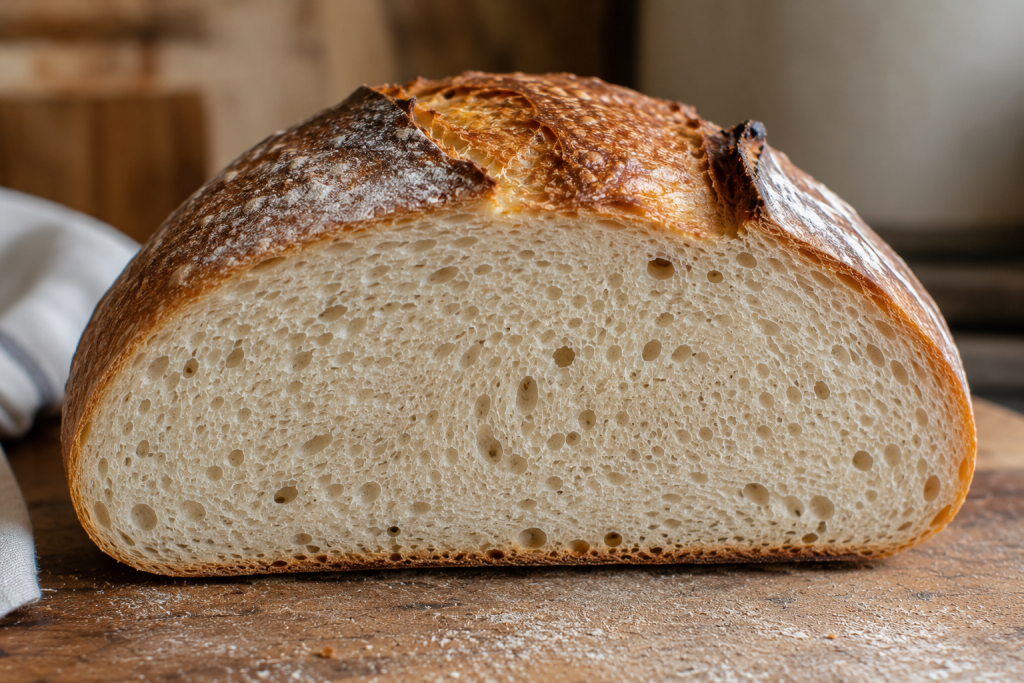
Sometimes the prettiest loaf in the room is a humble 68% hydration loaf baked by somebody who understood fermentation properly.
A beautiful loaf doesn’t need giant holes the size of Vermont potholes.
Now let me give you two simple recipes to start playing with.
Beginner Friendly Lower Hydration Loaf (68%)
Ingredients
- 500g bread flour
- 340g water
- 100g active starter
- 10g salt
Method
Mix your flour and water first and let it sit about 30 minutes. That little rest helps the flour soak everything up nice and proper.
Then add your starter and salt. Mix until everything comes together. Over the next two hours, give the dough a few stretch and folds every 30 minutes or so.
Then let it bulk ferment until it looks puffed and airy, usually around a 50–75% rise depending on your kitchen.
Shape it gently, tuck it into a banneton or bowl, and let it rest overnight in the fridge.
Bake the next morning at 450°F in a Dutch oven until deep golden brown and your house smells like peace and comfort.
High Hydration Artisan Loaf (78%)
Ingredients
- 500g bread flour
- 390g water
- 100g active starter
- 10g salt
Method
Mix the flour and water and let it rest about 45 minutes before adding the starter and salt.
This dough benefits from coil folds instead of rough handling. Gentle hands win here. Wet your fingers instead of reaching for more flour every five seconds.
As it bulk ferments, the dough will slowly become smoother, stretchier, and full of air. When it jiggles and feels full of life, shape it carefully without smashing all those bubbles out.
Cold proof overnight and bake hot — around 475°F — in a well-preheated Dutch oven.
And when you pull that loaf out and hear the crust crackling while it cools, you’ll understand why people fall in love with sourdough.
It’s never really just about bread.
It’s about learning patience.
Learning rhythm.
Learning that some things cannot be rushed.
And sometimes it’s about standing barefoot in your kitchen at midnight whispering,
“Well… that didn’t go how I planned.”
That’s sourdough too.
Happy baking,
Rhonda